As an Amazon Associate I earn a commission from qualifying purchases which help support the operating costs of this site.
Rock Climbing Shoes
Climbing shoes with a flat or neutral sole are best for long multi-pitch routes, all-day comfort, and crack climbing. Flat soles are comfortable by comparison to high end competition climbing shoes. People new to climbing my favor the flat sole for comfort as they continue to improve and gain skill.
A slightly downturned toe with medium stiffness provides a good balance between comfort and performance. The slightly downturned cambered toe works well for slab and vertical walls and mild overhanging routes.
For steep overhanging sport routes, technical face climbing, and modern gym bouldering climbers tend to prefer an aggressively turned down toe with an asymmetric shape.
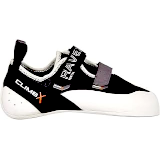
Indoor climbing shoes are made with softer, stickier rubber that enhances sensitivity on large plastic holds and resin volumes. This softer rubber tends to wear down quickly when it's used on rough outdoor rock surfaces. Indoor climbing footwear features more flexible mid-soles that allow your foot to bend, grip, and adapt to large, rounded, or unique gym holds. Slip-on styles or Velcro closures are practical for brief gym training sessions.
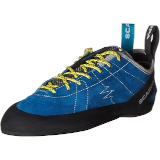
Outdoor climbing shoes are constructed with stiffer, more durable rubber designed to withstand abrasion from rough granite, limestone, or sandstone. The rigid mid-soles offer support when standing on small, sharp rock edges or micro footholds. Typically, outdoor climbing shoes have laces or multi-strap Velcro to ensure a snug, secure fit.